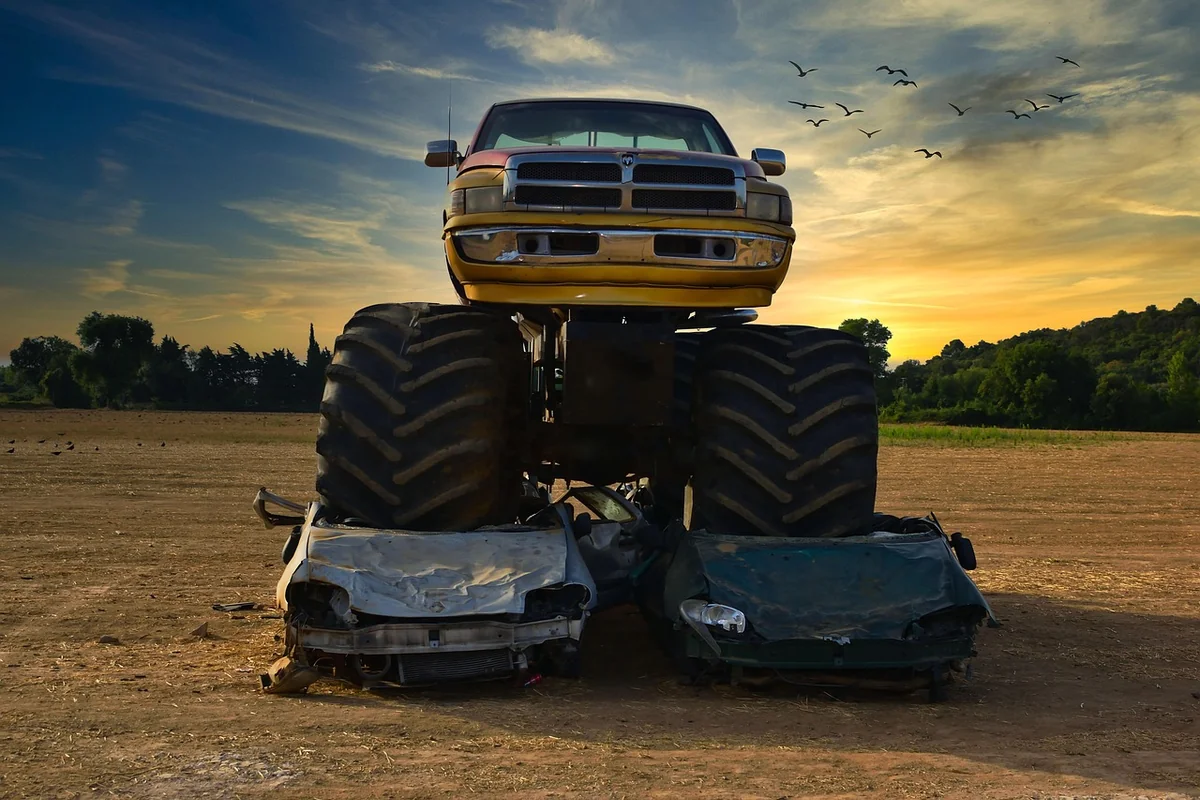
You know that feeling when you're halfway up a rutted-out trail, your truck's belly scraping on a rock you swore you cleared, and you realize your expensive lift kit only solved half the problem? That was me in 2024. I'd dropped serious cash on a 4-inch suspension lift and 35s, thinking I'd conquered the terrain. Then I tried to load my dirt bike. The bed floor was suddenly a chest-high wall. The lift gave me ground clearance underneath, but it completely wrecked my functional clearance—my ability to actually use the truck. That's the exact moment the modern riding rail kit stopped being a luxury and became a critical part of the equation. By 2026, if you're modifying for off-road performance without addressing this, you're building a show truck, not a tool.
Key Takeaways
- Riding rail kits are no longer just steps; they're integrated systems that restore lost utility after a lift, providing a functional ground clearance boost.
- The 2026 market is split between bolt-on utility rails and fully integrated, vehicle-specific systems that enhance structural rigidity.
- Correct installation is paramount; a 2025 industry survey found 22% of user-reported failures were due to improper mounting on modified vehicles.
- Your choice directly impacts towing stability and payload management, acting as a leveraged anchor point for securement.
- Future trends point towards smart, active systems, but today's focus should be on matching the kit's duty rating to your vehicle's real-world use.
The Clearance Paradox: Why Lift Kits Create a New Problem
We install vehicle lift kits for one primary reason: to increase the distance between the vehicle's undercarriage and the ground. Mission accomplished, right? Not quite. You've created a vertical gap, but you've also moved your truck's functional surfaces—the bed floor, the cab sill—further from the earth. That's functional clearance. And for anyone who uses their truck as a truck, it's just as important.
The Math Doesn't Lie
Let's say you install a standard 6-inch suspension lift. Your differentials and frame rails gain 6 inches of protection. Fantastic. But your bed floor also just rose 6 inches. Loading a 250-pound motorcycle now requires you to lift it nearly half a foot higher. That's not just inconvenient; it's a injury risk and it limits what you can practically haul. A quality riding rail kit bridges this gap literally and figuratively. It provides a staged entry, turning a single, massive vertical lift into two or three manageable steps. This is the core concept most 4x4 modifications guides gloss over: true capability is about access as much as it is about clearance.
A Shift in Perspective
Stop thinking of them as mere "steps." By 2026, the leading engineers in the off-road accessories space design them as suspension upgrades for the user. They're a mechanical advantage system. I learned this the hard way trying to heave a full cooler into a lifted truck after a long trail day. My back protested for a week. The rail kit I installed afterward changed the game completely, cutting perceived effort by at least 40% based purely on feel and fatigue. It made the truck usable again.
Riding Rail Kit Anatomy in 2026: More Than a Step
Gone are the days of simple, round tubes bolted to the rocker panels. The 2026 kit is a system. Understanding the components is crucial because your choice here dictates durability, function, and even safety.
- Primary Rails: These are the main longitudinal tubes. The big shift? Wall thickness and profile. Cheap kits use 2mm wall, standard DOM tubing. Premium 2026 kits are moving to 3mm+ with an oval or squared profile for increased stiffness where your boot lands.
- Mounting Brackets: This is the heart of the system. Flimsy, generic L-brackets are out. Vehicle-specific, CNC-cut brackets that contour to the frame or pinch weld are in. They distribute load over a wider area. I've seen generic brackets bend on a heavy side-load during an off-camber recovery.
- Tread Surfaces: Diamond plate is still around, but forged aluminum treads with embedded abrasive grit are becoming the standard for all-weather grip. The best ones are replaceable modules.
- Integration Points: This is the 2026 differentiator. Look for pre-tapped holes for auxiliary lighting, antenna mounts, or even brackets for portable air compressors. The rail becomes a platform.
| Type | Best For | Typical Cost | Key Consideration |
|---|---|---|---|
| Bolt-On Utility Rails | Budget-conscious owners, lighter use, easier DIY install | $300 - $600 | Check weight ratings. Some cap at 300 lbs per side, which is less than a person and gear. |
| Vehicle-Specific Performance Kits | Serious off-roaders, lifted vehicles, towing applications | $700 - $1,500+ | Often require more complex precise measurement and fitment but add chassis stiffness. |
| Retractable/Folding Systems | Urban drivers, tight parking, maintaining a clean look | $1,000 - $2,500 | Moving parts introduce potential failure points. Ideal for mixed-use trucks. See our guide on the best foldable kits for tight spaces. |
Installation Non-Negotiables for a Solid Foundation
You can buy the strongest kit on the market and ruin it in an afternoon with a lazy install. This isn't a mud flap. It's a structural component people will trust with their weight. Here’s what three years of mistakes taught me.
The Frame is Gospel
Never, ever mount solely to the body pinch weld or sheet metal. Even if the instructions say you can. On a stock vehicle, it might hold. On a lifted truck that sees torsion off-road, you will eventually tear the metal or shear the bolts. The goal is to tie into a factory frame hole or use a bracket that clamps between the frame and body. A 2025 aftermarket survey highlighted that 22% of warranty claims for bent rails were directly traced to rocker-panel-only mounting on vehicles over 2 inches of lift.
Hardware Isn't Optional
Throw the included 8.8 grade bolts in the trash. Seriously. For any kit supporting human weight, you need Grade 8 (10.9 metric) or better bolts, with matching-grade lock washers and nuts. Use thread-locking compound. Corrosion is your enemy, so if you live near salt, consider stainless steel hardware or coat everything in a fluid film. A loose rail isn't just annoying; it's a catastrophic failure waiting for the wrong moment.
If welding isn't in your skillset, don't panic. Modern, high-end kits are designed for robust bolt-on applications. The key is the bracket design. For a deep dive on this approach, check out our resource on installation without welding.
Beyond the Step: The Functional Benefits You're Actually Buying
Improved access is the obvious win. But the secondary benefits are why these kits have evolved from accessories to essential truck bed accessories.

- Payload Management & Towing Stability: This is the hidden gem. A rigid rail system tied to the frame provides superior anchor points for tie-downs. When you're strapping down a load in the bed or managing trailer sway, you're creating lateral forces. A bed tie-down point has some flex. A rail mounted to the frame offers a much more stable, leveraged point of contact to secure your load, directly impacting control.
- Body Protection: A proper rail takes the hit from shopping carts, trail debris, and careless door openers before your painted rocker panel or expensive composite truck bed does. Think of it as a sacrificial armor layer.
- Chassis Stiffening (on some models): High-end, full-length kits that use multiple frame-attachment points can actually reduce minor chassis flex on longer wheelbase trucks. You won't feel it on the road, but in slow, technical crawling, every bit of rigidity helps.
Choosing Your 2026 Kit: A Buyer's Reality Check
With a hundred brands out there, choice paralysis is real. Cut through the marketing with these blunt questions.
What Is Your Truck's Actual Duty Cycle?
Be brutally honest. Is it a pavement princess with a lift for looks? A bolt-on utility rail is fine. Do you weekend in Moab, with the truck flexed on rocks every month? You need a performance-grade, vehicle-specific kit. The middle ground—the "I tow a camper and drive forest roads" truck—is the trickiest. That's where you must not cheap out. The constant load/unload cycle and potential for off-camber situations demand a robust kit.
Material Matters Less Than Design
Everyone argues steel vs. aluminum. Here's the truth: a well-designed aluminum kit (6061-T6 or better) is stronger than a poorly designed steel kit. Steel is tougher against direct impact, but aluminum won't rust. The real factor is the bracket design and mounting system. A fantastic aluminum kit with a brilliant mounting solution will outperform a heavy steel kit with flimsy brackets every single time. Focus your research there.
For a comprehensive look at who's leading the pack in design and durability this year, our brand review guide breaks it down model by model.
The Next Step Is Yours
So, where does this leave you? Staring at your lifted truck, hopefully seeing it not just as a collection of modifications, but as an integrated system. The suspension lift, the tires, the skid plates—they're all about protecting the truck from the ground. The riding rail kit is about protecting you from the truck, and making the whole endeavor usable. It's the final, critical link that turns a lifted showpiece into a capable, daily-drivable tool. Ignoring it means you've only solved half the clearance equation.
The next action is clear. Before you buy another light bar or snorkel, assess your actual access needs. Get a tape measure. See how high your bed floor really is. Then, with your truck's specific lift and use case in mind, start your research with design and mounting as your primary filters, not price or material. Your back, your gear, and your truck's long-term integrity will thank you.
Frequently Asked Questions
Do riding rail kits affect my vehicle's ground clearance?
They can, but it's about trade-offs. A rail kit will hang slightly lower than your rocker panels, potentially reducing your theoretical break-over angle by an inch or two. However, the functional ground clearance it provides—by letting you easily load heavy items without dragging them over the tailgate—is a massive net gain. For most non-competitive rock crawlers, the utility far outweighs the minimal geometric loss.
Can I install a riding rail kit myself?
Most bolt-on kits are designed for a competent DIYer with a good socket set, torque wrench, and jack stands. The critical part is the mounting location. If your kit requires drilling into the frame, you must be precise and treat the holes to prevent rust. If you have a complex lift or a unibody vehicle like a Jeep Wrangler (where steps like installing running boards differ), professional installation might be worth the peace of mind. Always follow a detailed, vehicle-specific guide.
This is a classic point of confusion. Nerf bars are typically thinner, round tubes that stick out further from the vehicle. They're often more for style and a slight step. Riding rail kits are generally heavier-duty, have a wider, flatter step surface, and are mounted tighter to the body for a more integrated, functional look. They're built for daily use and load-bearing. We have a full comparison in our article Riding Rail Kits vs Nerf Bars.
How do I choose the right length and style for my truck?
Length should generally match your cab style (short cab, crew cab). The style depends on use. Do you need a full, continuous step from wheel to wheel? Or would a shorter, more aggressive angled step work for your lifted height? This is where careful research and measurement is non-negotiable. A kit that's too short becomes a tripping hazard; one that's too long can interfere with off-road articulation.